


Keeping Patients Stable. Supporting Care Between Hospital Visits.
Outpatient Heart Failure Infusion & Management Center
Our Outpatient Heart Failure Infusion & Management Center offers timely assessment, treatment, and follow-up for eligible patients—helping manage symptoms, improve quality of life, and reduce unnecessary hospital visits.

Outpatient Program
A New Model for Heart Failure Support
Heart failure is one of the most common reasons patients return to the hospital. A strong outpatient management program can help patients receive earlier attention when symptoms begin to worsen.
Our heart failure program is built around close monitoring, fast communication, and coordinated care from a cardiovascular team that understands each patient's history
What the Program May Include
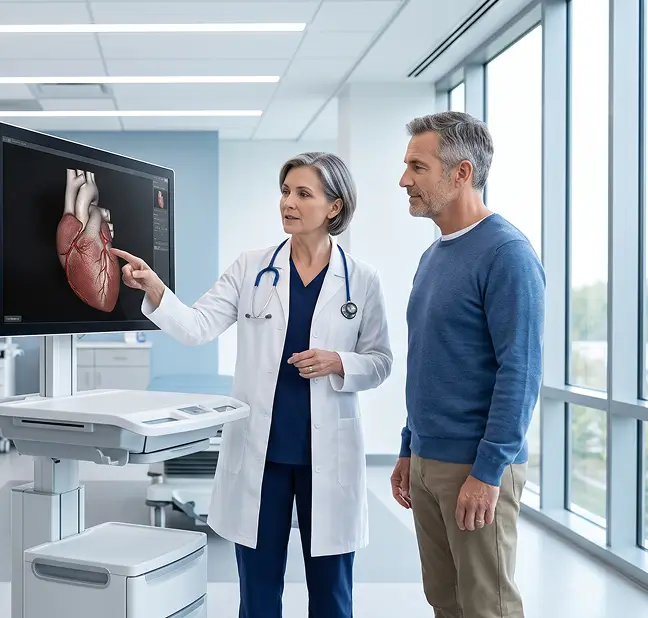
Rapid symptom evaluation
Our team assesses changes such as swelling, weight gain, shortness of breath, fatigue, and fluid retention.
On-site lab testing
Lab work may help the clinical team understand kidney function, electrolytes, fluid status, and overall stability
Medication and treatment review
The care team reviews medications and symptoms to determine the most appropriate next step.
Monitored outpatient IV diuretic therapy
For selected patients, outpatient IV diuretic therapy may help remove excess fluid in a controlled clinical setting.
Close follow-up
Patients receive continued guidance and follow-up to help reduce the risk of deterioration after treatment.
Who This Program Is Designed For
This program may be appropriate for certain patients with a known heart failure diagnosis who are experiencing worsening symptoms but do not require emergency care. Eligibility is determined by the Beckley Cardiology clinical team.
- Patients with fluid buildup or swelling related to heart failure
- Patients with recent weight gain that may signal fluid retention
- Patients who need closer monitoring after a heart failure hospitalization
- Patients whose symptoms may be managed safely in an outpatient setting
- Patients who benefit from coordinated cardiology follow-up and medication management

When to Call Beckley Cardiology
Patients with heart failure should contact the office if they notice changes that may signal worsening fluid retention or reduced stability.
- More swelling in the legs, ankles, feet, or abdomen
- Sudden or unexplained weight gain
- More shortness of breath with normal activity
- Trouble lying flat because of breathing discomfort
- Increased fatigue or weakness
- Questions about medications or new symptoms
When to Seek Emergency Care
The Heart Failure Infusion & Management Center is not a replacement for emergency care. Some symptoms
require immediate medical attention.
- Chest pain or pressure
- Severe shortness of breath
- Fainting, confusion, or severe weakness
- Blue lips or severe breathing distress
- Stroke symptoms such as facial drooping, arm weakness, or trouble speaking
- Any sudden or severe symptom that feels like an emergency

for patients and caregivers
Why This Matters for Patients and Families
Heart failure can be stressful for patients and caregivers. Having a dedicated outpatient program gives patients a clearer place to turn when symptoms begin to change, helping reduce anxiety and support faster decisionmaking.
More confidence between visits
Patients and families know who to call when symptoms change.
Continuity of care
The same cardiovascular team can evaluate symptoms, review history, and guide follow-up.
Potentially fewer avoidable hospital visits
When safe and appropriate, outpatient treatment may help patients stabilize before symptoms require hospitalization.
A better care experience
Patients receive focused attention in a clinical setting designed around outpatient heart failure management.
Diagnose earlier. Treat proactively. Keep patients out of the hospital when appropriate
Hospital-level cardiac support - without starting at the hospital
Close follow-up from one integrated cardiovascular team
Heart failure care should feel connected, not confusing.
Our team can help eligible patients manage worsening symptoms, receive timely evaluation, and stay connected to the care they need.
This website is not for medical emergencies. If you are experiencing chest pain, severe shortness of breath, stroke symptoms, fainting, or another medical emergency, call 911 or go to the nearest emergency department.